
When commercial property owners consider a cost segregation study, one of the first questions that arises is: “What portion of my investment qualifies for accelerated depreciation?” The answer begins with a fundamental principle in tax law; land is not depreciable.
Understanding how land value affects your cost segregation study is essential to setting realistic expectations and maximizing the tax benefits available from your commercial property investment.
Why Land Value Matters
The IRS does not allow depreciation deductions on land because land does not wear out, become obsolete, or get used up over time. Unlike buildings and their components, land is considered to have an indefinite useful life.
This means that before a cost segregation study can even begin, the value of the land must be separated from the value of the building and site improvements. Only the depreciable basis, everything except the land, can be analyzed and reclassified into shorter recovery periods.
In simple terms: The higher the land value, the lower your depreciable basis, and the smaller the potential tax benefit from cost segregation.
How Land Value Is Determined
Establishing an accurate land value is a critical first step in any cost segregation analysis. CSSI uses several accepted methods to allocate value between land and improvements:
Purchase Price Allocation
If you recently acquired the property, the purchase agreement or settlement statement may include a breakdown showing how much of the purchase price was attributed to land versus improvements.
Property Tax Assessment
Local tax assessors typically separate land value from improvement value on property tax records. While not always precise, these assessments provide a useful reference point and are widely accepted by the IRS.
Appraisal Reports
A professional appraisal conducted at or near the time of purchase or construction often includes a detailed allocation of land versus building value based on market data and comparable sales.
Comparable Sales Analysis
The goal is always to use a reasonable, supportable, and defensible method, one that aligns with IRS expectations and withstands scrutiny.
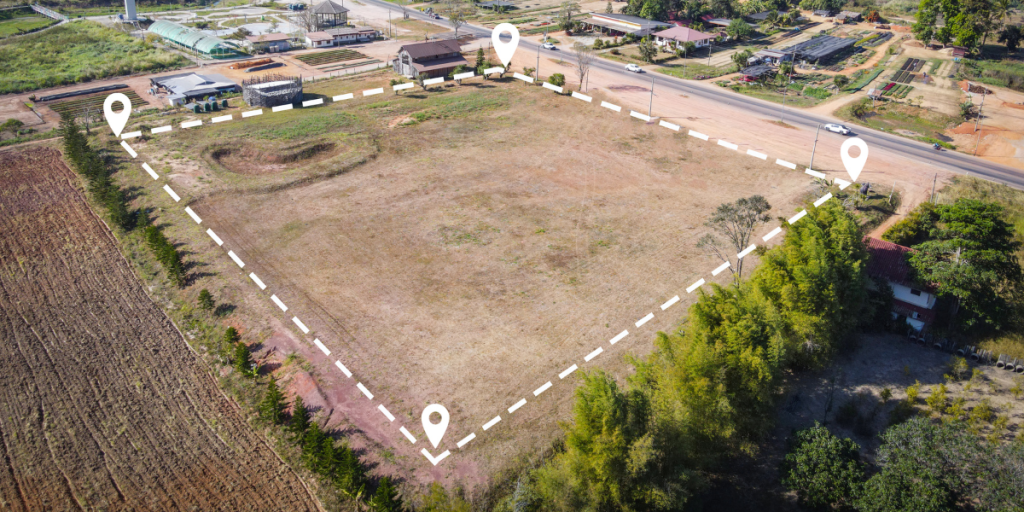
Land Value Varies Significantly by Property Type and Location
Not all properties have the same land-to-building ratio. Consider these examples:
- Urban high-rise office building: Land may represent 40–60% of the total purchase price due to prime downtown location and limited availability
- Suburban industrial warehouse: Land might account for only 15–25% of the value, with most of the investment tied to the building structure
- Retail strip center with large parking lot: Land allocation could fall somewhere in between, depending on local market conditions
Location, zoning, density, and market dynamics all influence how much of your investment is tied up in non-depreciable land.
What Happens During a Cost Segregation Study
Once CSSI establishes the land value and removes it from the depreciable basis, CSSI’s engineering team performs a detailed component-level analysis of the remaining property improvements:
- Building Structure and Shell: Typically depreciated over 39 years (commercial) or 27.5 years (residential rental)
- Land Improvements: Items like parking lots, landscaping, and site utilities; often reclassified to 15-year property
- Personal Property: Equipment, fixtures, and certain finishes; reclassified to 5- or 7-year property
Companies that move more value defensibly into shorter recovery periods generate greater immediate tax savings and cash flow benefits.
Why an Accurate Land Valuation Protects You
Using an inflated or unsupported land value can reduce your depreciation deductions unnecessarily. Conversely, understating land value may trigger IRS questions or adjustments during an audit.
CSSI takes a conservative, well-documented approach to land valuation. Our engineering-based methodology ensures that every allocation is supported by objective data, industry standards, and accepted appraisal principles. This protects you from audit risk while maximizing legitimate tax benefits.
The Bottom Line
Land value is the starting point, not an obstacle, in unlocking the full potential of your cost segregation study. By accurately determining what portion of your investment is depreciable, you can move forward with confidence.
Want to know how much of your property qualifies for accelerated depreciation? CSSI offers a complimentary analysis to help you understand your potential savings. Our team will review your property details, assess the land-to-improvement allocation, and provide a clear estimate of the tax benefits available through cost segregation. Or, find out for yourself what you could be saving with our free cost segregation calculator.


